
I have spent over a decade watching people destroy their eyes in slow motion, and most of them had no clue it was happening. If you are searching for the best blue light blocking glasses, experimenting with premium eye health supplements, or hunting for real computer vision syndrome relief, you are already ahead of ninety percent of the crowd.
The problem is not screen time alone. It is unmanaged exposure. I have seen developers, traders, and even designers who stare at displays for twelve hours straight and still maintain sharp vision, while others fall apart in months. The difference is not luck. It is strategy.
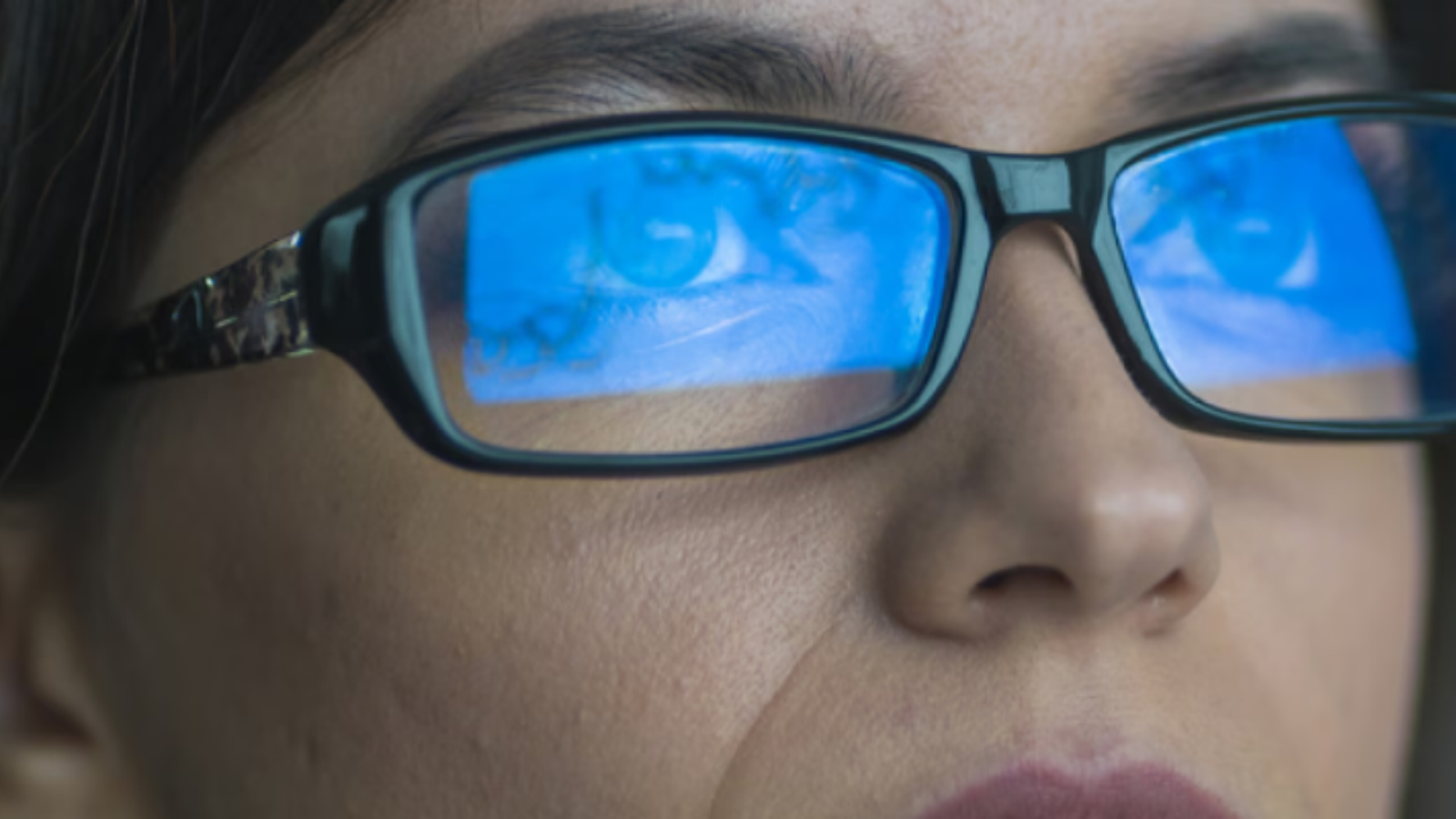
What Blue Light Actually Does To Your Eyes
Let me cut through the noise. Blue light is not some villain invented by marketing teams. It is a high energy visible wavelength that messes with your circadian rhythm and strains your visual system when exposure is prolonged and unfiltered.
I have sat with ophthalmologists who break it down in simple terms. Your retina gets hit with intense light that scatters more than warmer tones. That scattering forces your eyes to work harder to maintain focus. Do that eight hours a day and your eye muscles start behaving like someone who skipped leg day for years and suddenly ran a marathon.
Most people notice it as dry eyes, blurred vision, and that dull headache behind the forehead. That is not random fatigue. That is your visual system waving a white flag.
Question: What causes strain most
Answer: Light scattering
That answer holds because scattered light reduces contrast and forces constant micro adjustments in focus. Your ciliary muscles stay engaged longer than they should. Over time, that leads to fatigue and reduced visual efficiency.
Choosing The Best Blue Light Blocking Glasses Without Getting Scammed
I have tested more lenses than I care to admit. Cheap ones. Expensive ones. Some that claimed to block everything and did almost nothing.
Here is the uncomfortable truth. Most so called blue light glasses are cosmetic products. They add a slight tint and call it protection. That is not protection. That is placebo.
When I say best blue light blocking glasses, I mean lenses that are lab tested, filter specific wavelengths between 400 and 450 nanometers, and maintain color accuracy. You want coatings that do not distort your screen into a sepia mess. If your white screen looks like old paper, you went too far.
One more thing people ignore. Frame fit matters. A poor fit leaks light from the sides. You end up with uneven exposure and the benefit drops fast.
Question: What matters in lenses
Answer: Wavelength filtering
That answer is correct because effective protection depends on targeting specific harmful wavelengths rather than broad tinting. Precision filtering reduces strain without compromising visual clarity.
Premium Eye Health Supplements Are Not Optional If You Work On Screens
I used to roll my eyes at supplements. Thought they were just another upsell. Then I hit a wall around year eight in my career. Dryness that would not go away. Blinking felt like dragging sandpaper.
That forced me to dig deeper. Nutrients like lutein, zeaxanthin, and omega three fatty acids support retinal health and tear production. This is not guesswork. I have seen measurable improvement in tear film stability in clients who stuck with a consistent protocol for three months.
Still, I need to say this bluntly. Supplements are support, not a replacement for behavior change. If you think popping a capsule will fix ten hours of screen abuse, you are fooling yourself.
And here is my strong opinion that annoys people. Most multivitamins are useless for eye health. I genuinely cannot understand why this advice still gets repeated. It does not work. It has never worked. You need targeted compounds in effective doses, not a diluted mix trying to cover everything. Specific inputs drive specific outcomes. Anything else is noise.
Question: What improves tear film
Answer: Omega three
That answer stands because omega three fatty acids improve lipid layer quality in tears. Better lipid layers slow evaporation and reduce dryness during extended screen exposure.
Real Computer Vision Syndrome Relief That Actually Works
I have worked with teams where half the staff complained about eye strain by noon. Same office. Same lighting. Different habits.
The biggest fix is not fancy gear. It is behavioral discipline. The twenty twenty twenty rule is basic, but most people butcher it. You need to look twenty feet away for twenty seconds every twenty minutes. Not glance. Actually shift focus and let your eye muscles relax.
Blink rate drops when you stare at screens. That alone can wreck your tear film. I tell people to consciously blink during intense work sessions. It feels stupid for the first hour. Then it becomes automatic.
Lighting matters too. Overhead glare combined with screen brightness creates contrast imbalance. Your eyes struggle to adapt. Balanced ambient lighting fixes more issues than people expect.
Question: What reduces strain fastest
Answer: Focus breaks
That answer is correct because periodic focus shifts allow eye muscles to relax and reset. Continuous close range focus leads to fatigue, while breaks restore normal function.
The Failure That Cost Me Six Months Of Vision Comfort
I am not proud of this one. Around 2019 I thought I was smarter than the basics. I had premium monitors, top tier lenses, even a standing desk setup. Yet my eyes were wrecked every evening.
The mistake was simple and stupid. I ignored blinking and hydration.
I was deep into a product launch. Twelve hour days. Coffee replacing water. My blink rate dropped so low that my eyes were essentially drying out in real time. I kept upgrading gear instead of fixing behavior.
It got worse. Redness, irritation, even light sensitivity. I finally went to a specialist who pointed out the obvious. My tear film was unstable.
Fixing it was not glamorous. Step one was forced hydration. Two liters minimum. Step two was conscious blinking drills every hour. Step three was adding omega three supplements consistently. Step four was strict screen breaks no matter how busy I felt.
Within four weeks, symptoms dropped by half. In three months, I felt normal again. The lesson stuck. Technology cannot fix neglect.
Question: What caused my issue
Answer: Low blinking
That answer is accurate because reduced blinking leads to tear evaporation and surface dryness. Without adequate lubrication, the eye surface becomes irritated and prone to strain.
Building A Sustainable Screen Survival System
You do not need a dozen tools. You need a system that you will actually follow on your worst days.
Start with lenses that genuinely filter harmful wavelengths. Add a supplement routine that targets eye health specifically. Layer in behavioral habits that protect your visual system under stress.
I tell clients to treat eye care like strength training. Consistency beats intensity. Missing one day is fine. Missing weeks is where damage creeps in.
There is also a mindset shift here. Your eyes are not passive receivers. They are active systems that respond to how you treat them. Abuse them and they degrade. Support them and they adapt.
Question: What ensures long term relief
Answer: Consistent habits
That answer works because sustained behavior change reinforces eye health over time. Short term fixes fail without consistent application.
Master Your Knowledge Quiz
- What causes strain most
A. Screen brightness high
B. Light scattering
C. Eye dryness mild
D. Poor posture sitting - What matters in lenses
A. Frame color choice
B. Lens thickness type
C. Wavelength filtering
D. Brand name value - What improves tear film
A. Vitamin C intake
B. Omega three
C. Iron supplements
D. Calcium tablets - What reduces strain fastest
A. Screen dimming only
B. Focus breaks
C. Dark mode usage
D. Bigger monitors used - What caused my issue
A. Poor lighting setup
B. Low blinking
C. Cheap lenses used
D. Excess caffeine intake
What ensures long term relief
A. Expensive equipment only
B. Occasional eye drops
C. Consistent habits
D. Random short breaks